Welcome to The B-Side! Here we talk about movie stars! And sometimes we get to talk to stars about their own B-Sides!
Today is a big one for us. The legend Josh Hartnett is on the podcast to talk about his new film Verity and dish on some of his B-Sides, including Town & Country, August, and Valley of the Gods.
We chat with Hartnett about his growth as an actor, his memories on the chaotic set of the Warren Beatty-starrer Town & Country, his love for the underseen August, his joy making Lucky Number Slevin, and the luck and stress of having both his big movie (Verity) open mere days before his big new show (Below).
We make mention of this fascinating Vanity Fair piece from 2001, as well as his intentional disappearance from Hollywood in the mid-2000s. There’s also a brief mention of his potential regret in dismissing a chance at playing Batman for Christopher Nolan early on.
Read or listen below and subscribe here. Be sure to give us a follow on Bluesky at @tfsbside.bsky.social. Enjoy!
The Film Stage: I feel like over your career, you’ve chosen such an interesting variety of projects. What drew you specifically to Verity, and how did you get involved?
Josh Hartnett: Well, I mean, honestly, what drew me to it were the people that were involved. I love Anne and Dakota’s work. Michael Showalter is one of those directors who seems to be able to switch genres and do things within each genre that’s fresh and somehow geared toward a specific audience in, like, the perfect way. There are very few of them who can take the audience’s perspective, watch their film, and not be obsessed with putting their signature thing in it. And he just wants to serve the script and the genre. And he’s so good at that—taking his ego out of the equation. This is just a guess, I haven’t talked to him about it, but it might be because he was an actor, so he’s looking to kind of fulfill these different characters.
And, like, this—this is a new character form, for sure. And I think he did an excellent job. The movie is so Gothic and filled with a claustrophobic sort of noir intensity. And it’s also funny, and it’s charming, and all the characters—all the actors are—I mean, the girls are amazing in it. I am just very happy with the result, and I think people who see it will be, too, I hope.
I’m glad you mentioned “funny,” because I think there are elements in the movie that a certain audience might not know that they’re allowed to chuckle at a little bit. And I think probably Showalter’s background in absurdist comedy probably helps that a little bit, too. In terms of your performance, you’ve played a range of, let’s call them, duplicitous characters, and you kind of, oftentimes, play characters where two things need to be true, both to yourself and to an audience. And I’m always impressed in the way you can juggle that. How do you kind of wrangle that when you’re confronted with it as an actor?
I mean, it’s different for each character, but for this character it was relatively simple because there are two versions of who Jeremy is. And for most of the film, I’m playing one. And that version is someone who’s very much on his own side and has experienced incredible loss and is dealing with the fallout of that. And that is ultimately not true, anyway, in the revision at the end; it’s just that he does things in the revision at the end that are much more sinister.
I’ve been thinking about this actually recently, and there are certain actors that are really, really good at playing, like, public face / private face with characters. Because working with Anne and we’re doing the press tour, I just watched The Devil Wears Prada 2. And Meryl Streep is one of those characters that’s so good at, “Okay, this is the public version of this character,” and then that breaks down and then she’s got who the character is underneath, who the real person is. I’ve always been interested in that, and I think that works out in the same sort of way when you’re talking about characters that are holding two realities at once, as well.
You mention your enjoyment of Showalter’s ability to be ego-free and fit into whatever style a movie might require. And watching this, I’m obviously reminded quite a bit of the films of Brian De Palma. And you worked with De Palma on The Black Dahlia, and you have such a great presence in that movie, because I feel like you know exactly what movie you’re in. I think that movie’s kind of quite underrated. And both films kind of deploy this similar sense of fun camp we’re talking about. And I was just curious, 20 years later, are there any insights that you’re bringing from working with De Palma to a movie like this, where Showalter’s kind of maybe trying to do the same thing?
I love that you brought that up, but I didn’t even think of it that way. So no: I didn’t bring anything from that, because I had ultimately always thought about this as, like, an Adrian Lyne-style thriller. And so I was always looking at those films, being like, “How do we bring that sense of…”
You’re channeling Michael Douglas…
You know, something like that. I just worked with Michael Douglas.
I was going to ask you—you’re in the new Oliver Stone movie!
Yeah, I play Oliver. I mean, it’s not officially Oliver, but it’s—
That blew my mind that. That’s his first feature in 10 years; that’s so cool.
I know! And he’s one of those directors that I grew up on, and I think is underrated.
I think now, it’s weird. He won two Best Director Oscars, and somehow now he’s kind of, not unlike De Palma actually, underrated almost.
Totally underrated now. I think he’s won three Oscars for writing, as well. He’s a talented guy. But also: I grew up in that era when The Doors was coming out the same year as JFK, and you’re like, “How does this director do that?”
Yeah.
Those films are nothing alike! Not in any way. And ostensibly based on real people, but that’s it, you know? Like, everything else is different. And yeah, so I was always a big fan of his, and so really, when he asked me to be in a film with him, which was actually a different film originally, and then he decided to switch it up and now we did this one, White Lies, had to do it. I had to do it. So, what was the question? [Laughs]
More about the Adrian Lyne thrillers, trying to fit into that same sort of mold.
Yes. So: we got into Michael Douglas. And actually, those Adrian Lyne thrillers were more my touch—I wasn’t obviously in them, but that was my touchpoint, whatever it was. That was what I was looking at before we started this film because I thought, “Yeah, if we can pull that off where there are different perspectives,: and all the characters have this seeming, like they’re people that you could come across in the street at the beginning, and then by the end, you’re like, “Oh, my God, these people are freaks!” They are! And like, that’s—we wanted that to come across in our film, and I think it does.
Yeah, I think it fits right in the canon, for sure.

August
A movie we always bring up, and you actually spoke to us about a few years ago, a true B-side movie that we love, is August, that you were in 20 years ago. You have this incredible scene at the end of that film with David Bowie, where he really hierarchically eats you in this way where you are this confident character who kind of gets his lunch handed to him. I’m always curious, as a performer, is that just an openness to the moment of letting a guy like that do it? Is it just a lack of ego?
I think so, and I think it’s made easier by the fact that it’s David fucking Bowie.
[All laugh]
Like, I’m already shaking! Yeah. But yeah: I love that film. Thank you for championing it.
It should come back! We’re in this other bubble happening and that movie’s about the dot-com bubble. Let us sing the praises of that film now more than ever.
I think it was prescient, too. It came out just before 2008 and everything that happened then, and then it’s crazy. I think that film is fantastic. I really like Austin Chick as a director.
I want to ask: you worked on Town & Country. I just need a memory, because that is such an insane cast. And for those who don’t know, Warren Beatty is the star, Peter Chelsom movie, everybody you’ve ever heard of is in this—this huge movie. What do you even remember?
It was a long, long time ago. Uh, I remember that I was hired to be on it for about two weeks, and I was there for months!
[All laugh] Can I tell you something we were laughing about? You’ll appreciate this. In the opening credits, you’re credited as “Joshua,” and in the end credits, you’re “Josh.”
They couldn’t even get that right!
You were on the film for so long that you went from Joshua to Josh! We were like, Joshua was so young when they started, he was like, “Sure, I’ll go as Joshua,” and by the end, you’re like, “Look, I’m a star now. I’ll go as Josh.”
Right, yeah! I love that dropping the “ua” makes me a star. It was such a strange production, because by the time I came on to it, it had been going for a while. And I was supposed to literally come in and play a few scenes, be on for two weeks, and then they decided to start rewriting again. And they rewrote, and they rewrote, and they rewrote, and Buck Henry was rewriting it with—so he was in the palace that he and Warren Beatty kept together somewhere where they were working on it, and we were all sitting in our trailers out in the kind of trailer park area, and it would be, like, myself, Diane Keaton, Nastassja Kinski, Garry Shandling, all these incredible actors. One day Charlton Heston was in there waiting with us. And we just waited.
And you’re just like, “Hey man, Ben-Hur, huh? That’s crazy…”
Yeah! Absolutely! I mean, it was just nuts, and it went on and on and on. And to my own detriment, in a way, because there was a film that I was offered at the time that became a massive hit. I couldn’t do it because I was stuck on Town & Country. But in the midst of that, I was able to work with Warren Beatty, Diane Keaton, Goldie Hawn, Garry Shandling, and all these amazing actors, and kind of get to know them because there was a lot of downtime. It’s definitely stuck with me.
One of the great things about your career you’ve had this incredible capacity to have [a range of different projects]. Since we’ve spoken, you made Valley of the Gods, right? Great, crazy movie. And Exterminate All the Brutes, the Raoul Peck, I guess technically a miniseries. You must always be searching for that weird, ambitious element to go with?
The ambition, definitely, yeah. The ambition is the thing that I respond to. And Lech Majewski, who directed Valley of the Gods, had directed so many ambitious films up until that point.
He had done the Rutger Hauer movie about the painter Pieter Bruegel, right?
That was right before, yeah. The Mill and the Cross.
Good movie, crazy movie.
Brilliant movie, so cool. So I’ve been able to work over the course of my career with lots of real artists, genuine artists, kind of exploring their craft, and I think that’s—just selfishly—one of my favorite bits of being an actor. Trying to get inside the heads of these directors and figure out what it is that they want and why they want it. Not just for my character, but what they’re trying to say with their work. And even if it’s kind of the more difficult, the work, the more exciting it is for me, in a way—the more difficult to understand, the more exciting it is, because you’re getting a sense of where they’re coming from and what they’re trying to achieve in the oeuvre of their career. And then I’ve been lucky to work with a lot of really commercial directors, so that I can support the habit of working with [other directors].
Robert Duvall directed you!
Yep.
That must have been such a surreal, weird experience.
And he called me out of the blue. I was on vacation with my then-girlfriend, now my wife, an, my agent at the time said, “Uh, Robert Duvall wants to talk to you about something.” I was like, “What?”
[All laugh]
Okay, awesome! And yeah: he’s like, “Hey Josh, it’s Bobby D!” And he wanted to talk about making this film that he’d always wanted to work on, that he’d co-written a long time ago. He wanted me to play one of his sons, and I was like, “Absolutely, without a doubt.” And I had a really wonderful two months working with him on that and getting to know him. That connection to the things that I used to love in cinema when I was a kid±it’s a joy to be able to do something like that, sure. So yeah: super lucky.

The Virgin Suicides
I’ve heard you talk about how you feel like you’ve grown as an actor and you’re better now than you were, right? Like you’ve just continued to improve your craft. When you look back, is there a performance when you were younger that you feel like you were really locked in, where you’re like, “I was figuring it out”?
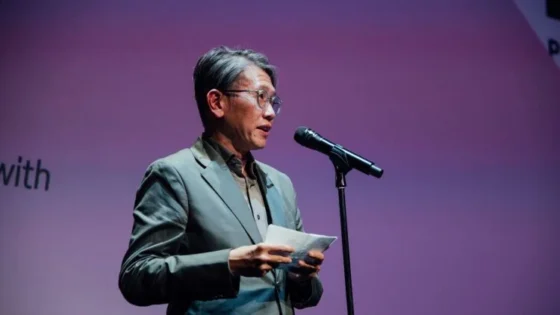
I haven’t seen anything I’ve done from back then in a very, very long time, but Sofia Coppola got an award at MoMA last year, and so I went to give a little speech and to congratulate her. And before I went up to give the little speech, they did, like, a whole segment of The Virgin Suicides. This montage of five of my scenes or something from it, and I was pleasantly surprised.
All right!
It was a fun—Trip Fontaine was a good role, and it was a lot of fun, and I was so young. I was 19 years old. And so, in a way, yeah: I was proud that it has stood the test of time.
It does feel immediately iconic, that performance, when you show up. She frames it perfectly. What about the Paul McGuigan movies? Those have aged really well.
Yeah! Oh, have they?
I think so. Wicker Park and Lucky Number Slevin, I feel like they have their own dedicated audience. I mean, you’ve got to complete the McGuigan trilogy one day.
Iwould love to, because Lucky Number Slevin is one of my favorite films I’ve ever been a part of, because that was all friends. Friend of mine, Jason Smilovic, wrote it. He and I did some little work to it that summer. My friends produced it, and we got Paul to direct it, who I’d just worked with on Wicker Park, so it was all friends. And then we were like, “Okay, well, I think we’re going to make it. We don’t really have the budget yet, but like let’s go for it, let me aim high with our casting and see if we can get just one of these actors.” And everybody said yes!
So somehow we got this incredible cast, and suddenly we had the money to make the film, and we were just shooting it that winter. I wish we’d reversed that and done the rewriting in the winter so that we’d shot in the summer, Montreal, because Montreal’s not a nice place to be in the winter. Lovely city, way too cold. But it was such a great time making that film. And I had a lot of input on it because it was all my buddies making it, so it felt like my first real producing gig.
Well, that’s a good memory. I think it’s incredible what you’ve been able to do, and it’s so cool now that you’re at this point with Verity and everything of exploring this space. It must feel nice to be here, you know what I mean?
It feels really good. And the weird thing is I shot this and Below back-to-back And Below was a totally different type of thing. The characters are so different, and the fact that they’re both coming out the same week feels simultaneously terrifying. It’s kind of a make-or-break week, this might be the last time we speak.
[Laughs]
Or it could go really, really well. I mean, let’s see. But I’m very proud of both of them, and they’re 100% different types of characters, so I’m very curious to see what people think of both.
Verity opens in theaters on October 2 and Below hits Netflix on October 8.