As exciting as it can be to catch some of the most-anticipated films of the year in their festival debuts, it’s perhaps even more enticing to seek out the work that one may not have a chance to see for quite some time. With the 64th New York Film Festival kicking off this Friday, September 25, at Film at Lincoln Center, we’ve highlighted the must-see selections still seeking U.S. distribution at the time of publishing. For more coverage, follow here and subscribe to our daily newsletter.
At Night (Beatrice Gibson)

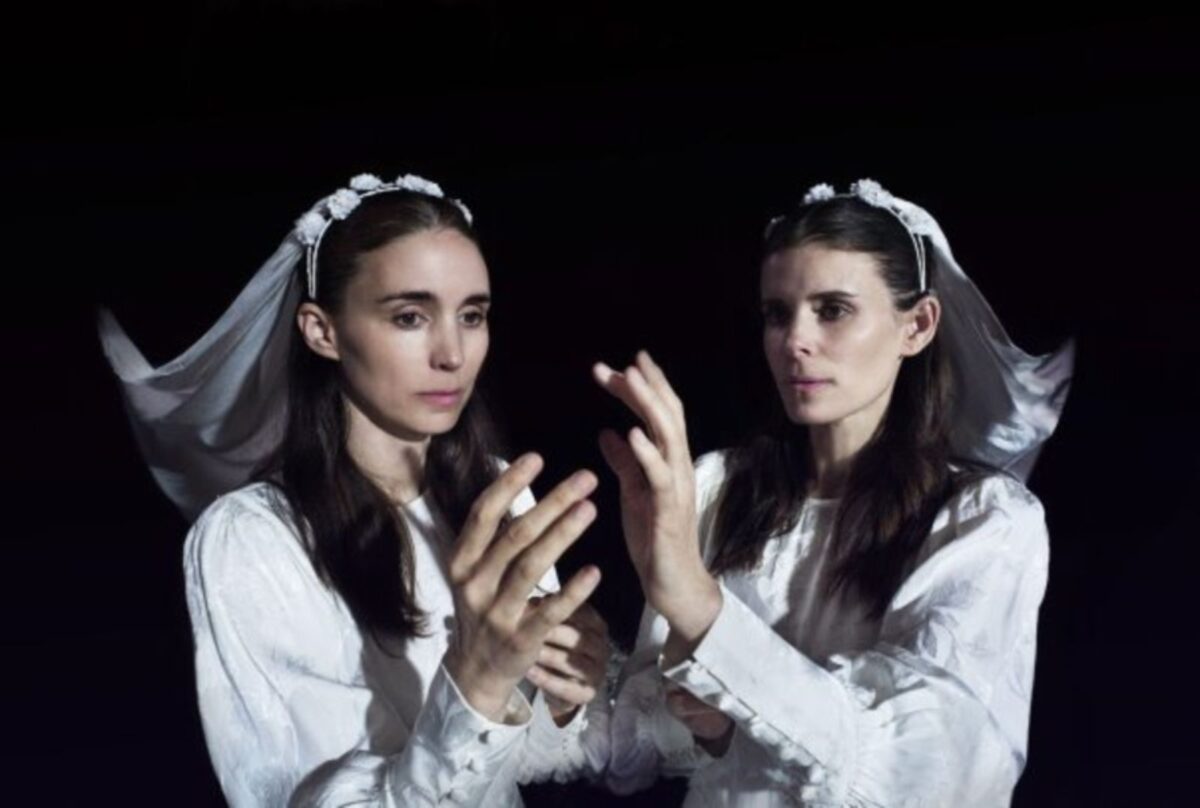
The best movie I saw at Locarno this year is set in Paris after dark, on sleepy side streets, in fluorescent eateries and nocturnal cafes and bars. At Night plays at the unhurried clip of a Rachel Cusk novel, and with similar shades of that author’s displaced POV and melancholic allure. As its images wash over you, you get a sense of an artist yearning for somewhere else while remaining resolutely curious for what’s around the corner. – Rory O. (full review)
Bucking Fastard (Werner Herzog)
Past a certain age and a certain number of features, a director will almost inevitably be embroiled in that stifling debate: have they reached their “late” style yet? What that means exactly can be tricky to articulate: writing about Beethoven, Theodor Adorno viewed late works of art as “devoid of sweetness, bitter and spiny”—masterful distillations of one’s craft pared down until the end result is sheared to the point of impenetrability. Two days from now, Werner Herzog will turn 84. Bucking Fastard, his latest feature in an ever-expanding filmography, is his first work of fiction since 2019’s Family Romance LLC, about the titular Japanese company renting actors to stand in for any person the customer desires. But nothing about it suggests an artist trying to strip down their approach, much less sculpt something that’s intransigent or confrontational. Bucking Fastard is an unwieldy, singular oddity to behold, but also a work animated by childlike wonder for its strange subjects and the strange world around them. There’s an earnestness that makes it hard to write off as a minor doodle from a man who’s spent his prodigious career evangelizing about “the ecstatic truth.” – Leonardo G. (full review)
A Day in the Life of Jo: Chapter Phaedra (Jacqueline Lentzou)

Coming-of-age dramas are so rife with tropes and conventions that to come across one able to subvert them is nothing short of miraculous. Jacqueline Lentzou’s A Day in the Life of Jo: Chapter Phaedra is one such film. In its simplest terms, the story—about a wayward fifteen-year-old whose world is upended the fateful morning she hears a classmate sing—might suggest another formulaic entry into the canon. But watching that rapport develop, and Jo’s day reach its devastating climax, makes for an electrifying experience. Gradually, Lentzou’s second feature sheds its genre trappings to become something more daring and idiosyncratic. By the time it wraps, Phaedra has ascended to a place that defies facile descriptions, and a chronicle of a few hours in a teenager’s life has swollen into a much stranger, shapeshifting portrait. Straddling the real and the supernatural, Lentzou’s film wants to probe the divide between life and death, and cinema’s capacity to bridge the gulf separating them. – Leonardo G. (full review)
Double Freedom (Lisandro Alonso)
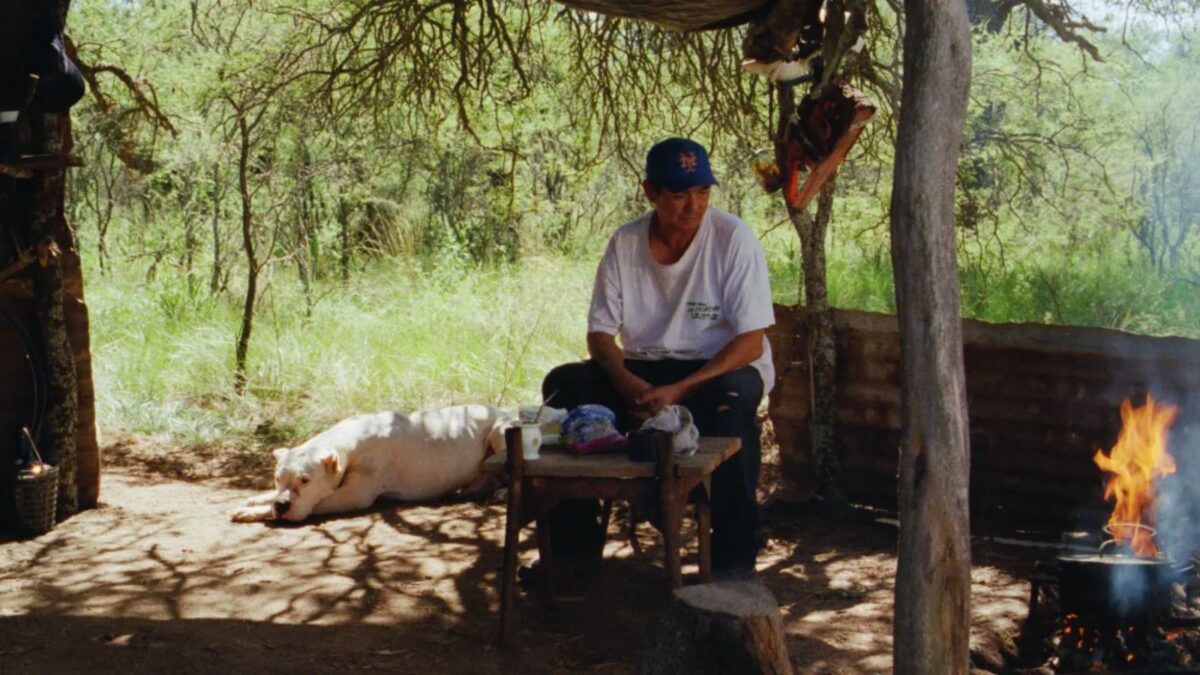
25 years later, the director returns to the subject with Double Freedom, following Misael, now in his fifties, as he does much of the same. Little has changed in a milieu that looks frozen in time: the man’s hut is still intact, his Dogo Argentino patrolling the place, and the days spent shedding trees into poles sold to neighbors erecting fences in the vicinity. Yet Double Freedom significantly expands the scope of its predecessor. A late-night opening shot of Misael feasting on a grilled armadillo modeled exactly after the protracted sequence that kicked off Freedom might trick you into thinking Alonso will revisit his first feature verbatim. But a twist arrives early on: the man is told his sister Micaela was seen roaming the nearby village on her own in the dead of night. She’s spent the last 15 years locked in a mental asylum; when Misael shows up to investigate, he’s told that budget cuts will force the place to shut down—he’ll have to look after her himself. – Leonardo G. (full review)
Edward Said: Between Worlds (Maiken Baird)

As the genocide inflicted on Palestinians continues with utter devastation, it can be helpful for those looking from the outside to get a comprehensive history of the community’s culture, history, and plight. Captured through the perspective of Palestinian-American academic and activist Edward Said, Maiken Baird’s archival documentary weaves a personal, insightful portrait of one of the great, late minds who dedicated his life to lucidly fighting for dignity and respect. – Jordan R.
Heil Jupiter! (Carlos Reygadas)

Returning with his first feature in eight years, Mexican filmmaker Carlos Reygadas’ Heil Jupiter! feels like a summation of all his past passions rolled into one rather epic time- and space-jumping tale. Initially focused on a pair of couples exploring sexual freedom on a beach, the surreal scope of Reygadas’ latest expands greatly as modern authoritative forces emerge, showing the limits of pleasure in a society designed to stamp out personal freedoms. – Jordan R.
I Deserve a Lover Whose Every Rise Sets Fiery Dooms Raging Across the Skies (Mani Haghighi)
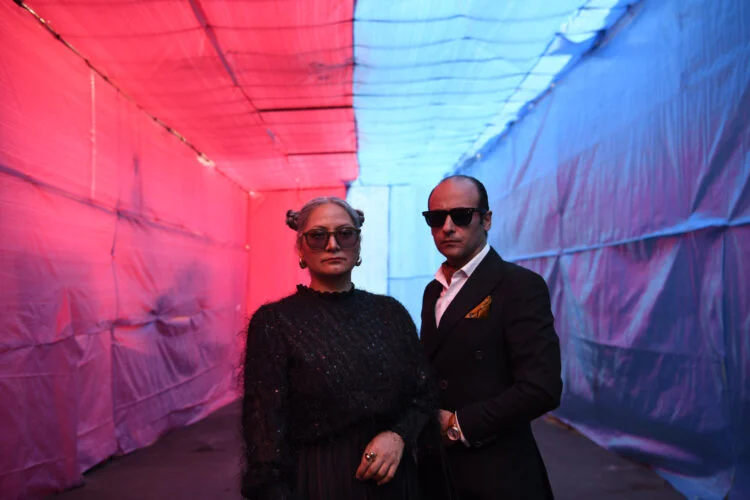
Fans of the poetic, radically riveting filmmaking of Sergei Parajanov are sure to adore Mani Haghighi’s latest, which at least wins the Best Title award for this year’s festivals. I Deserve a Lover Whose Every Rise Sets Fiery Dooms Raging Across the Skies, premiering in the New York Film Festival’s Main Slate, tracks the artistic pursuits of partners Nasser Bakhsh and Roghayeh Najdidi. Haghighi deserves as much acclaim as other contemporary Iranian directors; hopefully this offers a breakout. – Jordan R.
Joy of Joys (Jonathan Glazer)

The premise of Oscar-winning director Jonathan Glazer’s first documentary might not immediately sound like a work from the mind that gave us Under the Skin and The Zone of Interest. But this 38-minute, music-filled exploration—about the making of a 2026 charity album from War Child Records, which aids children in conflict zones around the world—should still feel unmistakably him. Even amid its exuberance, he keeps the sobering realities of war and evils confronting war-torn families firmly in view—another intriguing juxtaposition as he detours into non-fiction. – Jake K-S
Life of Jorge Luis Borges (Mariano Llinás)

And so El Pampero Cine finally reach Jorge Luis Borges. The Argentine experimental film collective—comprising Mariano Llinás, Laura Citarella, Agustín Mendilaharzu, and Alejo Moguillanksy—are a natural outgrowth of the Latin American literary tradition of Borges, Bolaño and Cortazar, making Llinás’ Venice world premiere Life of Jorge Luis Borges is a perhaps-inevitable tribute to their greatest artistic forefather. – David K. (full review)
My Wife Cries (Angela Schanelec)

Deep into the second week of another tumultuous (and freezing cold) year at the Berlin Film Festival, Angela Schanelec arrived with a welcome reminder of what summertime in the city feels like: a place where young people meet and chat and go for bike rides; a place where the uniform black and greys of winter outfits are exchanged for springtime hues; and a place where the relaxed stillness of a day can be punctured here and there by music or drama. In this milieu, Schanelec weaves a series of characters and conversations using dialogue that sounds dry, even stilted at times, but also often gives way to moments of real poetry and emotion. – Rory O. (full review)
The Remotes (John Torres)

It’s no wonder that the film I most thought of was David Lynch’s Lost Highway. Between The Remotes‘ darkly surreal noir mystery and the unnaturally cyclical nature of its visuals and sound, you wouldn’t need to twist my arm to make me believe everything onscreen is a dream. It’s not—Mijares isn’t the only one desperate for solace—but that doesn’t mean most is. Call it coincidence, fate, or delusion; nothing should be taken at face value. – Jared M. (full review)
What Can’t Be Mentioned (Dan Sallitt)

Dan Sallitt is about as one-of-one as anybody making narrative films in the United States today. You’re forgiven for not noticing, in light of his once-every-seven-years rate, but perhaps What Can’t Be Mentioned will offer a new entry for the unitiated. He’s followed 2019’s magnificent Fourteen with a sequel to 2012’s The Unspeakable Act, which concerned a young woman (Tallie Medel) contending with incestuous desire for her brother (Sky Hirschkron). Quite some time has passed and the siblings find themselves at new stations in life, but—as is the nature of sequels—one suspects too little has changed for such intractable problems to dissipate. Sallitt’s ultra-particular style, which rests somewhere between totally affected and wholly naturalistic, always services his precise dialogue and performers (here filled out by Kit Zauhar and Kyle McCormack), and a slim 61-minute runtime should ensure nary a moment lacks for psychological probity. – Nick N.
More Undistributed Films to See at NYFF64
- 9 Temples to Heaven
- Bardi
- Hanabi
- I Rarely Wake Up Dreaming
- London
- The Loneliest Man in Town
- The Man I Love
- Overt Listening
- Sixteen Moments of My Life
- Tomorrow a Long Time Ago
The 64th New York Film Festival takes place September 25-October 12. Get tickets here.