Looking for what to see in theaters? Our feature, updated weekly, highlights our top recommendations for films currently in theaters, from new releases to restorations receiving a proper theatrical run.
While we already provide extensive monthly new-release recommendations and weekly streaming recommendations, as distributors’ roll-outs can vary, this is a one-stop list to share the essential films that may be on a screen near you.
American Doctor (Poh Si Teng)

Poh Si Teng’s American Doctor is a harrowing, heartbreaking portrait of Palestinian, Jewish, and Zoroastrian doctors who are risking their lives to tend to the overwhelming victims of the ongoing genocide in Gaza and speak the truth in any way they can. Dan Mecca said in his Sundance review, “When will this end? When will this bloodshed stop? And when will the United States of America stop supporting it? Filmmaker Poh Si Teng offers a clear-eyed, unrelenting look at the genocide in Gaza with her documentary American Doctor. It follows three doctors––Dr. Feroze Sidhwa, Dr. Thaer Ahmad, and Dr. Mark Perlmutter––that are consistently trying to save lives in the Gaza Strip. On some trips they are approved to enter. On others they are denied for specious reasons. Dr. Perlmutter is Jewish, Dr. Sidhwa is Zoroastrian, and Dr. Ahmad is Palestinian. Their mission is the mission of all medical professionals: to heal everyone they can.”
Barbara Forever (Brydie O’Connor)

Avant-garde pioneer Barbara Hammer has received a much-deserved documentary portrait ahead of the world premiere of the new restoration of her seminal Nitrate Kisses at the New York Film Festival. As Dan Mecca said in our Critic’s Pick review out of Sundance, “The best thing about Brydie O’Connor’s documentary Barbara Forever is how it functions as an interesting, engaging movie on its own terms. It concerns the life of filmmaker Barbara Hammer, a pioneer of queer cinema and larger, cultural queer identity. And while there are plenty of films and archival photos and video to tell Hammer’s story, O’Connor is smart to never make this feel like homework. It is ultimately much more than a celebration of a great artist (Hammer passed away in 2019). Too often do these profiles of artists play it safer than said artist ever would. Barbara Forever does not do that. It often feels like a Barbara Hammer film itself while evolving into a sharp, clever montage that moves fast and entertains throughout. It’s funny and disarming and, ultimately, quietly uplifting.”
Buddy (Caspar Kelly)

After bringing much-loved surreal entertainment with his viral Too Many Cooks, Casper Kelly entered big-screen territory with his Sundance premiere Buddy, starring Cristin Milioti, Delaney Quinn, Topher Grace, Keegan-Michael Key, Michael Shannon, and Patton Oswalt. Caleb Hammond said in his Sundance review, “A mix of Barney and Blue’s Clues, the TV program Buddy follows a large pink unicorn who, alongside a supporting cast of anthropomorphized house objects, teaches the program’s children a new lesson each episode. All of the show’s elements—the colorful sets, the ’90s outfits the children wear, the songs they sing—point to Kelly’s deep understanding of the aesthetics and rules of the world that he subverts.”
Coyote vs. Acme (Dave Green)

The first sign that we’re in good hands comes right at the start. One of the script’s earliest character introductions is—of all people—Peter Lorre. In this world, he’s a scientist at the Acme Corporation (not to be confused with the grocery chain) evading security guards with a variety of nefarious devices like Expanding Boulders and Large Magnets. The second sign of quality is the law firm handling the titular court case: Avery, Jones, and Maltese. It’s the kind of naming convention that could only come from a creative team with a deep reverence not just for the Looney Tunes, but the medium of animation itself. – Devan S. (full review)
Chronovisor (Kevin Walker and Jack Auen)
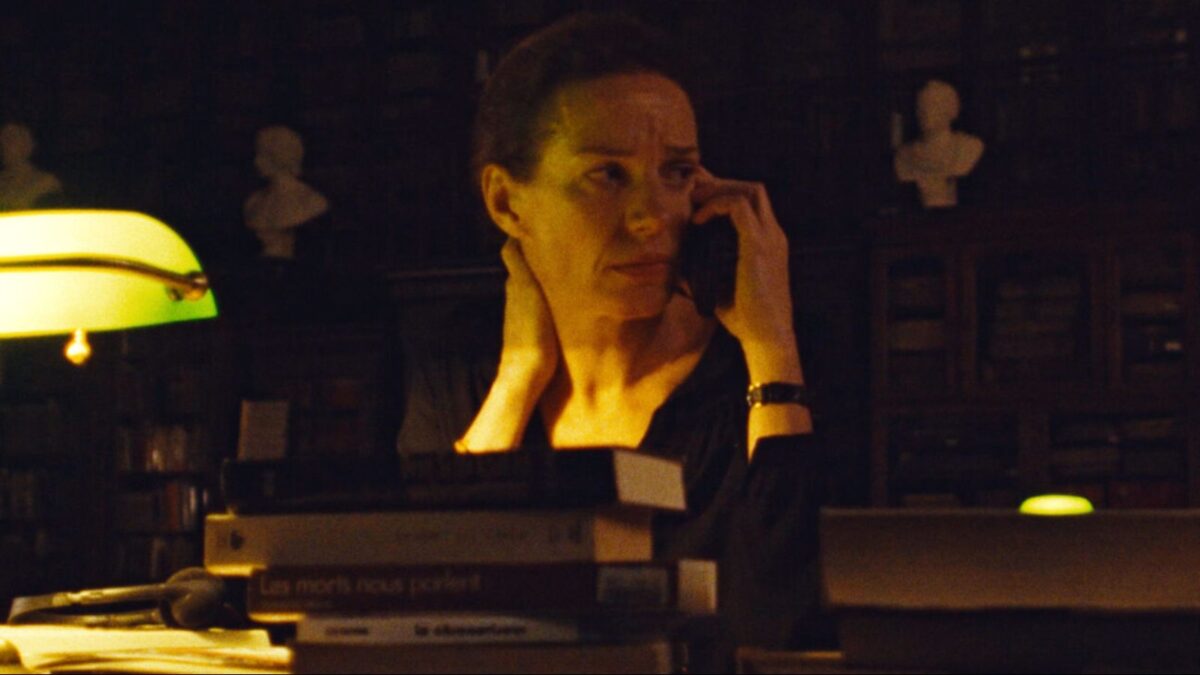
In a year of remarkable debuts, one of the most formally astounding comes with Kevin Walker and Jack Auen’s unclassifiable, riveting detective-meet-academia tale, Chronovisor. As Leonardo Goi said in our Rotterdam review, “Ostensibly set in the present, Chronovisor keeps jamming your temporal bearings. Save for the occasional smartphone, the ‘action,’ such as it is, unfolds in a world frozen in time (when Béatrice tries to contact one of Ernetti’s surviving relatives, it isn’t an email she sends but a typed letter). The focus gradually moves from the academic-turned-detective toward the media she consults: we hear recordings of a lecture Ernetti gave about his creation, watch old TV footage concerning the man and others who sought to communicate with the dead, but mostly we read. Chronovisor is so enamored with the written word that close-ups of books and articles comprise most of its runtime—with English translations of their various languages dished out not as subtitles but placed directly over the original text on the page. There’s nothing precious about the choice: Auen and Walker want you to read along with Béatrice, and what’s so fascinating about their film is the way it tries to combine two different art forms (literature and cinema) and different actions (reading and watching) all while adjusting its pace to the time needed to perform both.”
Dreams in Nightmares (Shatara Michelle Ford)

After their impressive directorial debut Test Pattern, which was nominated for both Gotham and Independent Spirit Awards, Shatara Michelle Ford returned to the festival circuit in 2024 with Dreams in Nightmares. Jourdain Searles said in her review, “Shatara Michelle Ford’s sophomore feature Dreams in Nightmares is a Black road trip film with a big heart, full of warmth, healing, and beauty. With their debut film Test Pattern, Ford announced themselves as an essential new voice in Black cinema, with a focus on the lives and struggles of Black women. Here, Ford tackles similar themes with a wider scope that includes Black femmes, queer love, and non-monogamous relationship structures. An even mix of comedy and drama, Dreams in Nightmares is a work that feels both casual and cathartic.”
Filipiñana (Rafael Manuel)

One of the most formally accomplished feature debuts to premiere at Sundance earlier this year, Rafael Manuel’s Jia Zhangke-backed feature debut Filipiñana is set at a country club in the Philippines as we follow a 17-year-old “tee-girl” who starts uncovering a rotting core of misogyny and violence amongst the higher-ups and clientele. With striking tableaus crafted by cinematographer Xenia Patricia, Manuel effectively pulls back the clashing layers of beauty and systemic issues to capture a country’s disparities. Read Jared Mobarak’s Critic’s Pick review.
Late Fame (Kent Jones)
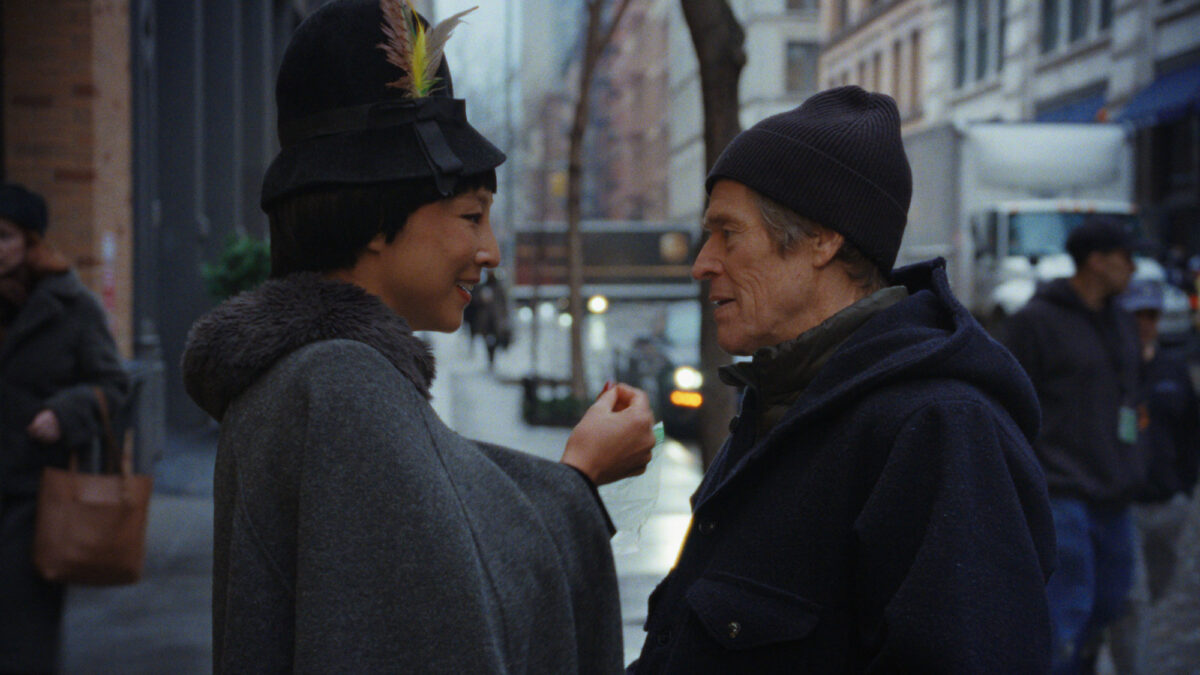
Returning after his directorial debut Diane, film scholar Kent Jones is back with Late Fame, which brings together Willem Dafoe and Greta Lee, working from a script by Samy Burch (May December) that itself adapts Arthur Schnitzler’s novella. As Leonardo Goi said in our Critic’s Pick review, “One need not be fluent in the ’70s New York poetry scene to appreciate such a piercing snapshot. Jones captures the boys’ milieu with near-ethnographic attention to its textures, patois, and etiquette; Late Fame is never funnier––or more consistently on-point––than when it turns to these pompous fresh graduates and their quirks. In adapting Arthur Schnitzler’s 1895 novella, Burch can posit Ed’s squad as analogue nostalgists in a digital world. But that, of course, is just one of their many poses.”
The Odyssey (Christopher Nolan)
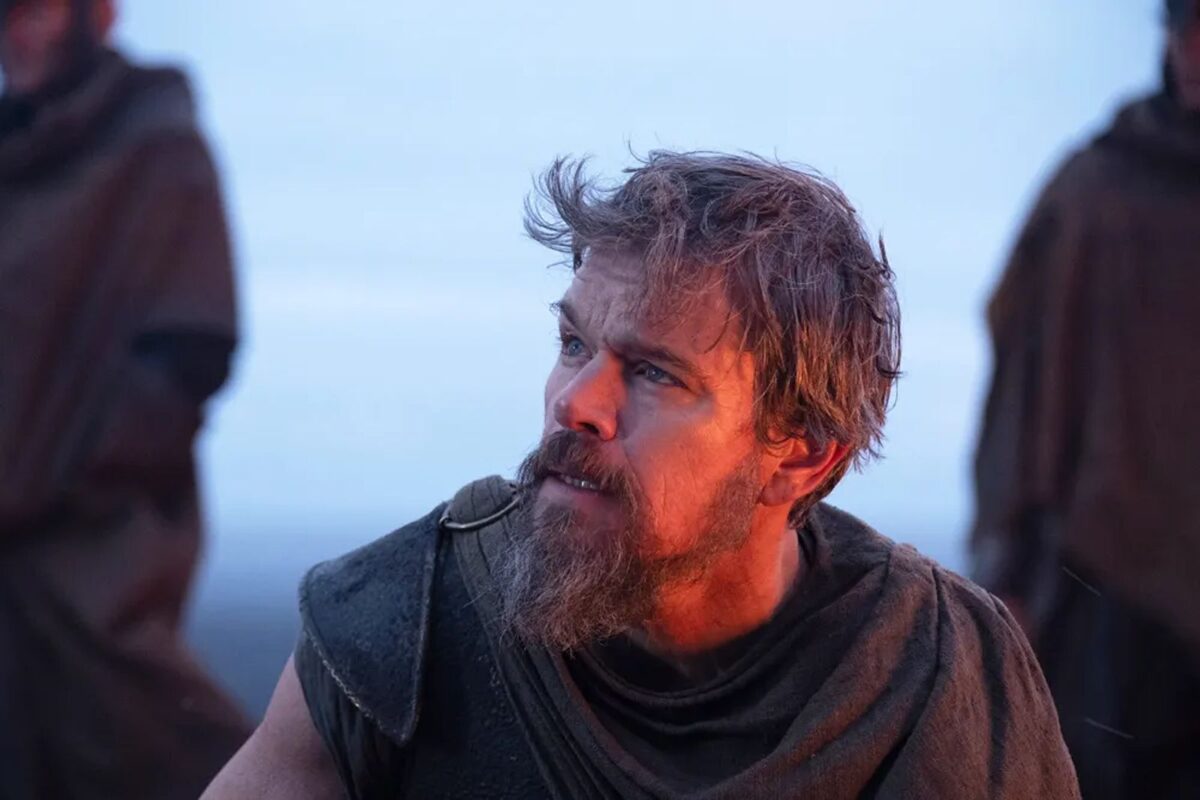
After a clunky opening setting the table for his time-hopping reworking of Homer’s epic, Christopher Nolan’s The Odyssey settles into a rhythm of melding awe-worthy spectacle with the emotional toll of a seemingly never-ending journey of despair and sacrifice. What I was most struck by, even for all its fantastical elements, is how much Nolan mines from the rather spare natural settings to instill a grounded sense of vastness when it comes to Odysseus’ journey. While one wishes for a bit more patience to take it all in, the trademark propulsiveness of the director works wonders as we discover the ingenuity of each setpiece. For another perspective, read Nick Newman’s eloquent review, which details why the technical feat of shooting entirely in IMAX has its drawbacks. – Jordan R.
The Rivals of Amziah King (Andrew Patterson)

Following up his impressive debut The Vast of Night, it’s been a long wait for Andrew Patterson’s delightfully ambitious second feature The Rivals of Amziah King, which premiered at SXSW last year and is now finally in theaters. John Fink said in his review, “Like the Church potluck to which Amziah King introduces his one-time foster daughter Kateri, The Rivals of Amziah King is a gleeful mashup of genres and tones blending bluegrass music, comedy, revenge, and heist-thriller elements into a tasty homestyle buffet full of eccentric characters and thick Southern accents. It’s a strong follow-up to the promise Andrew Patterson displayed in his resourceful debut feature The Vast of Night––even when this mash-up seems a little uneven and indulgent, with a heavy use of formal techniques, from slow-motion to ironic music.”
The Samurai and the Prisoner (Kiyoshi Kurosawa)
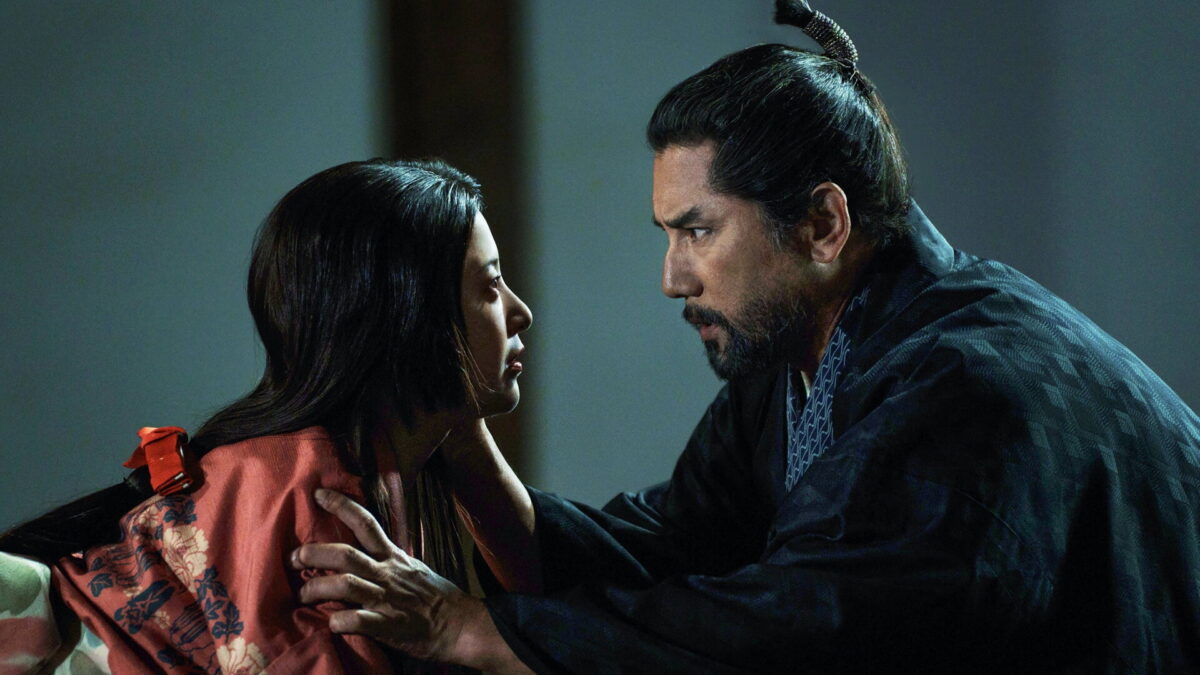
After viewing a certain ensemble period epic dominating the box office, the next that should be highest on your radar this summer hails from Kiyoshi Kurosawa. The Samurai and the Prisoner is a knotty, fascinating samurai mystery that sees the Japanese director adopt an entirely different register from most of his work, yet still showcases a thrilling set of formal tricks. Leonardo Goi said in his Cannes review, “Like its protagonist, The Samurai and the Prisoner is a curious oddity. It’s a film that keeps bloodletting to a bare minimum and delights in subverting genre expectations to fascinating effects. Where other recent entries in the canon opted for bigger, action-packed spectacles—recall Takeshi Kitano’s gruesome 2023 Kubi—this is a much more stately, almost contemplative affair, a kind of throwback to mid-century masterpieces from Kenji Mizoguchi and Akira Kurosawa.”
Serpent’s Path (Kiyoshi Kurosawa)

Transplanting the action from Tokyo to Paris, the new Serpent’s Path is fairly faithful to its predecessor in terms of story beats. Albert (Damien Bonnard) joins forces with Japanese psychiatrist Sayoko (Ko Shibasaki), with the latter being a gender-flipped interpretation of the previous schoolteacher role. The film kicks off with them abducting Laval (a brilliant weasel of a performance from Mathieu Amalric), a low-level accountant for the company Minard, whose employees are secretly involved in a child-trafficking organization known as The Circle. Laval’s interrogation takes place in the kind of decrepit, abandoned warehouse we’ve seen in much of Kurosawa’s work, and with the aid of deeper shadows and sharper framing from cinematographer Alexis Kavyrchine (who worked with the director on his previous French-language feature, Daguerrotype), the palpable sense of terror is turned up further from the very beginning. Serpent’s Path is the type of film that makes you want a shower afterwards, the hours spent in the muck of this environment and the psychology of these characters taking a toll on your spirit. – Mitchell B. (full review)
Teenage Sex and Death at Camp Miasma (Jane Schoenbrun)
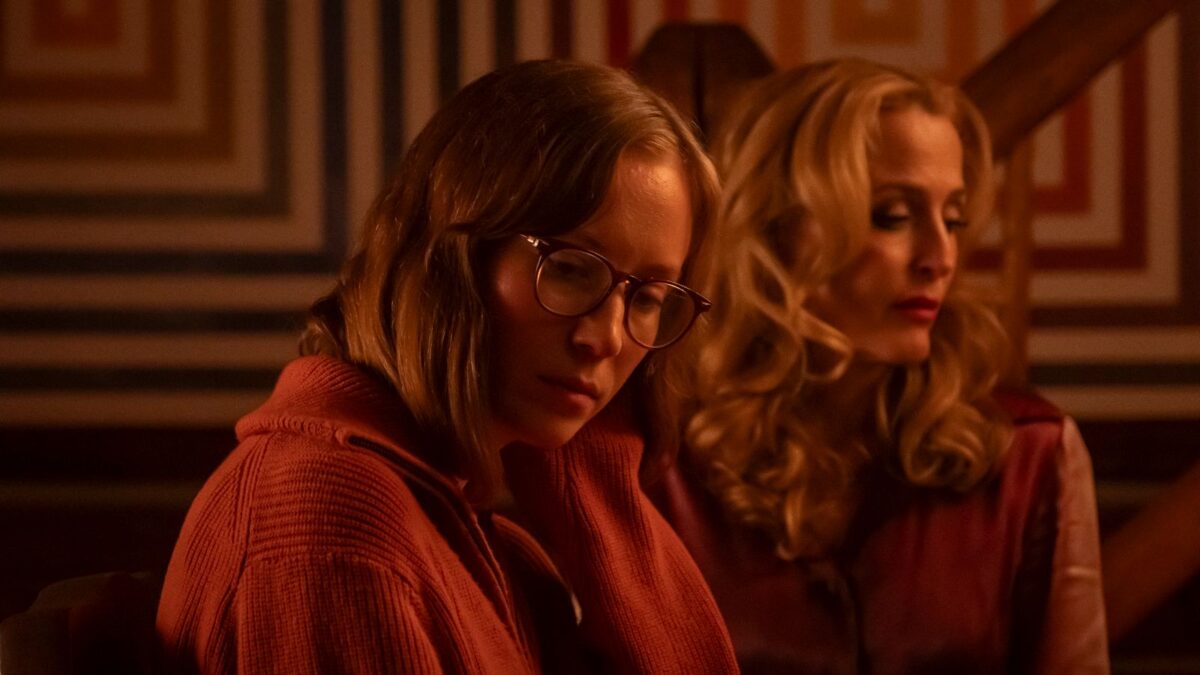
Jane Schoenbrun’s I Saw the TV Glow follow-up Teenage Sex and Death at Camp Miasma is a wildly entertaining exploration of the slasher film, erotic pleasure, and everything in between. Led by Hannah Einbinder and Gillian Anderson, Rory O’Connor said in his Critic’s Pick review from Cannes, “Shot masterfully by their regular cinematographer Eric Yue (Alex G also makes a welcome return as composer), the movie-within-the-movie’s formative kill scene is so mesmerizing that you’ll welcome Schoenbrun’s decision to play it again and again––all the better to get a feel for how Kris’ obsessions have led them to the movie’s climax, and perhaps their own. Yue and Schoenbrun’s approaches also perfectly align when capturing actresses’ faces, often in achingly beautiful close-ups that only occasionally allow for a flicker of menace. ‘There’s a hole at the bottom of the lake,’ Billy explains to Kris in one of those moments, setting off a sequence that is quickly becoming Schoenbrun’s signature—that churning sense of movie spiraling a drain as it drags you down with it.”
Tony (Matt Johnson)

After crafting one of the highlights of 2026 with the thrilling, hilarious Nirvanna the Band the Show the Movie, Matt Johnson is back with a look into the early life of the late, great chef Anthony Bourdain. Devan Suber said in his review, “Those looking for a movie about the man himself won’t necessarily come away with much about Bourdain or his background. As a film about how a small period of time can end up shaping a person, Tony is well observed and distinctive. If nothing else, it’s a welcome sign that Johnson can retain his signature voice while dropping some elements of his style and finding interest in a topic he might not care all that much about.”
More Films Now Playing in Theaters
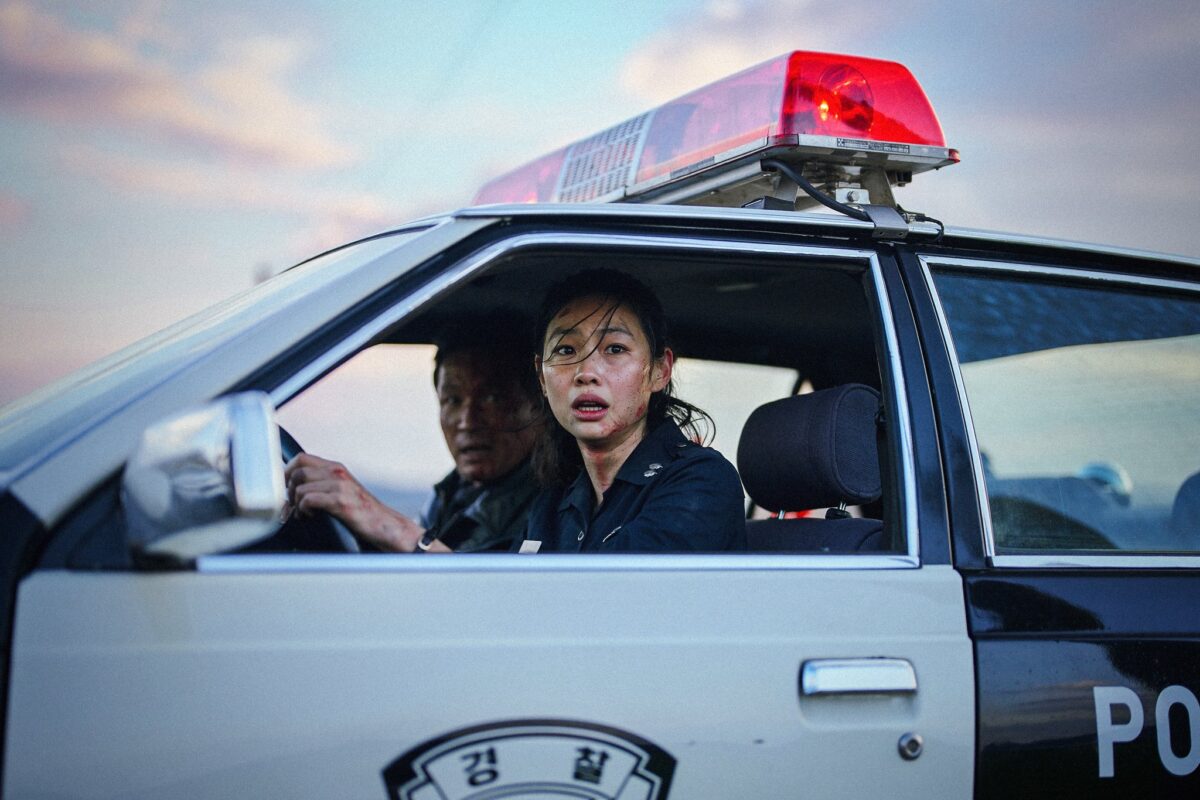
- Black Zombie
- The Dog Stars
- The End of Oak Street
- Hanging by a Wire
- Hope
- How to Divorce During the War
- Idiots
- The Oldest Person in the World
- The Sun Never Sets
- Union County
Read all reviews here. For our NYC-specific repertory round-ups, including many films that will tour the country, bookmark NYC Weekend Watch.